
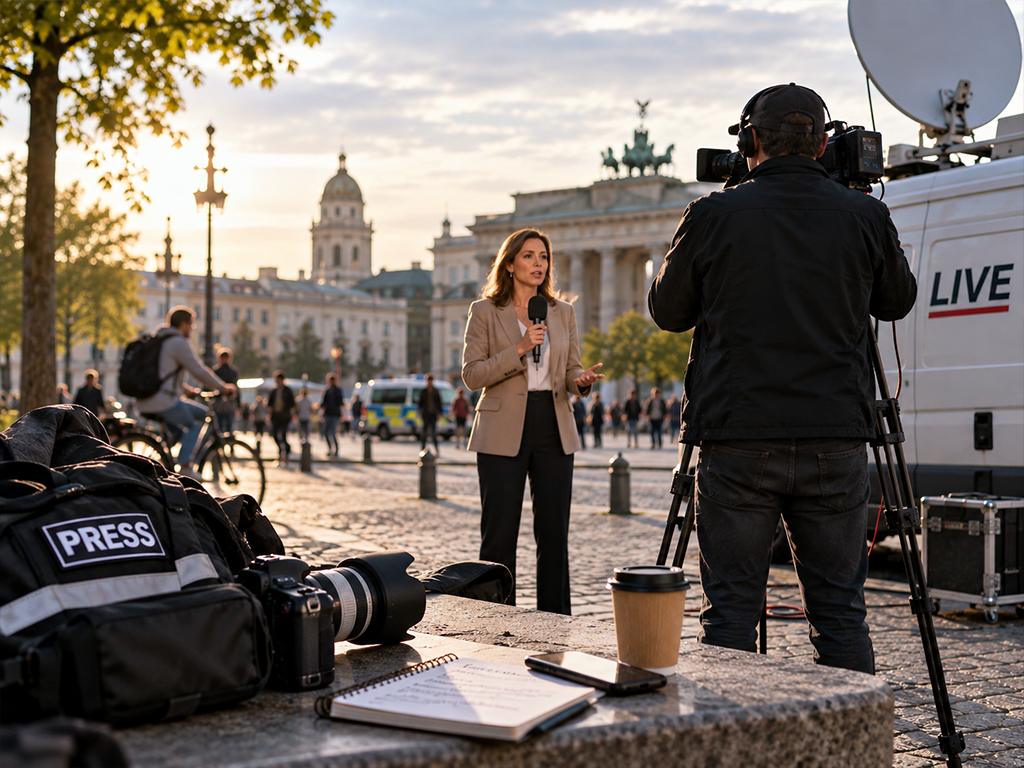
When the Call Comes, the Clock Is Already Running
Most photographic work is planned. A match has a kick-off time, a summit has an accreditation deadline, a portrait has an appointment. Breaking news has none of that. There is no briefing, no press officer waiting for you, no seating plan and no second chance. There is an incident, a growing perimeter, and a short window in which a photographer can still move freely enough to make pictures that explain what happened.
That window is the reason the first hour matters so much. In the early minutes, emergency services are focused on the emergency rather than on media management, and the cordon is often provisional, no more than two vehicles and a length of tape. Within thirty to sixty minutes that changes. A press officer arrives, a media point is designated several hundred metres away, and the photographs available from then on are the same photographs everyone else will file.
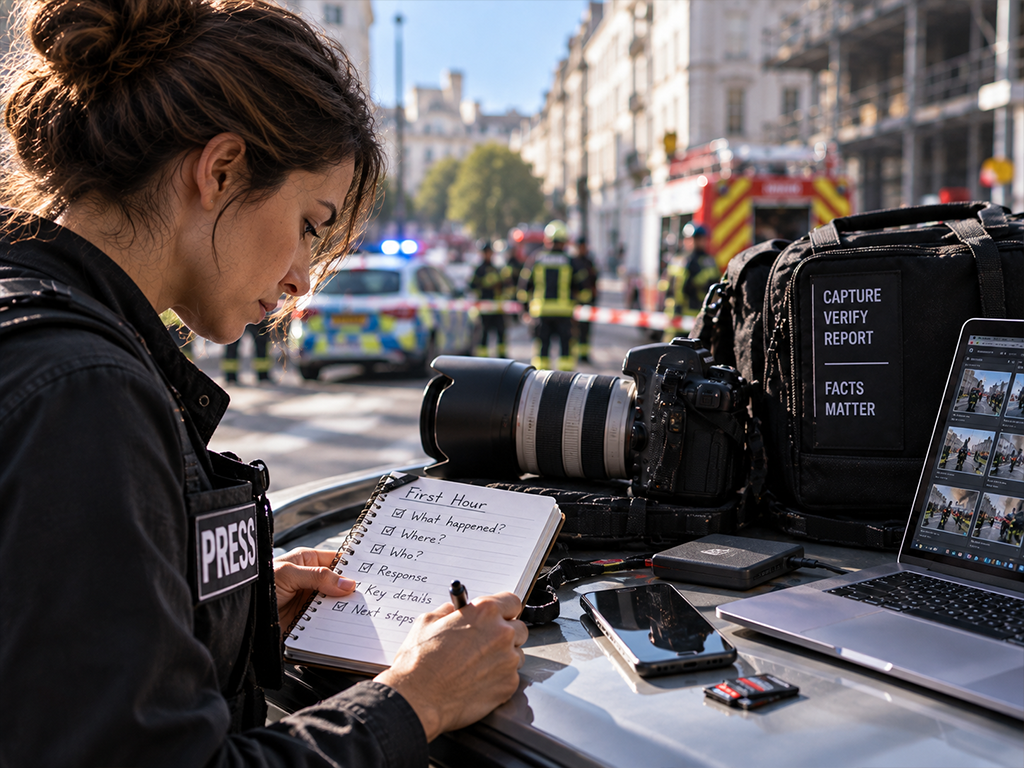
Editors, meanwhile, need three things quickly and usually in this order: a wide frame establishing what and where, a frame showing the response in progress, and a detail carrying a verifiable fact, such as a street sign or a damaged facade. A photographer who arrives with that sequence in mind works faster than one who arrives and starts looking for a picture.
None of this is about being braver than the next person. Photographers who handle breaking news well are rarely the ones who take the most risk; they are the ones who are prepared and who decided in advance what they will and will not do when they get there.
Ready Before It Happens: The Bag You Never Unpack
Preparation for spot news is not something you do when the news breaks. It is something that has to be finished beforehand, because the first hour offers no time for it. The practical test is simple: if you had to leave the house in four minutes, could you do it without thinking, and would everything in the bag work when you arrived?
The kit itself can be modest. Two bodies save you from changing lenses in rain, dust or smoke, and a 24-70 with a 70-200 covers almost every spot news situation, the longer lens also keeping you at a respectful distance from people who are hurt. Beyond that, the things that decide whether the assignment works are unglamorous:
- Batteries charged and cards formatted at the end of every job, never at the start of the next one
- High-visibility vest, a helmet if you cover industrial or structural incidents, gloves, FFP masks and a small torch
- Water, a power bank, and a cable that fits the phone you will use as a hotspot
- Credentials in the bag permanently, not in a drawer at home
- Camera clock set to the correct time and time zone, with your name and copyright written into the camera’s metadata fields, which turns a card full of frames into material with a verifiable timeline
The camera should also be pre-set so that the first frame is usable: an automatic ISO ceiling you trust, a minimum shutter speed fast enough for people moving under pressure, continuous autofocus, RAW plus a small JPEG for fast transmission. The first frames are often the ones nobody else has, and they should not be lost to settings left over from a studio job three days earlier.
Knowing that something has happened at all is part of the same preparation. Depending on your country, that means monitoring emergency service alerts where this is lawful, following verified local accounts and agency wires, and checking a second source before you drive. Much of what circulates in the first ten minutes of an incident is wrong, and a wasted hour in traffic is an hour you are not photographing anything.
Getting There, and Getting Parked
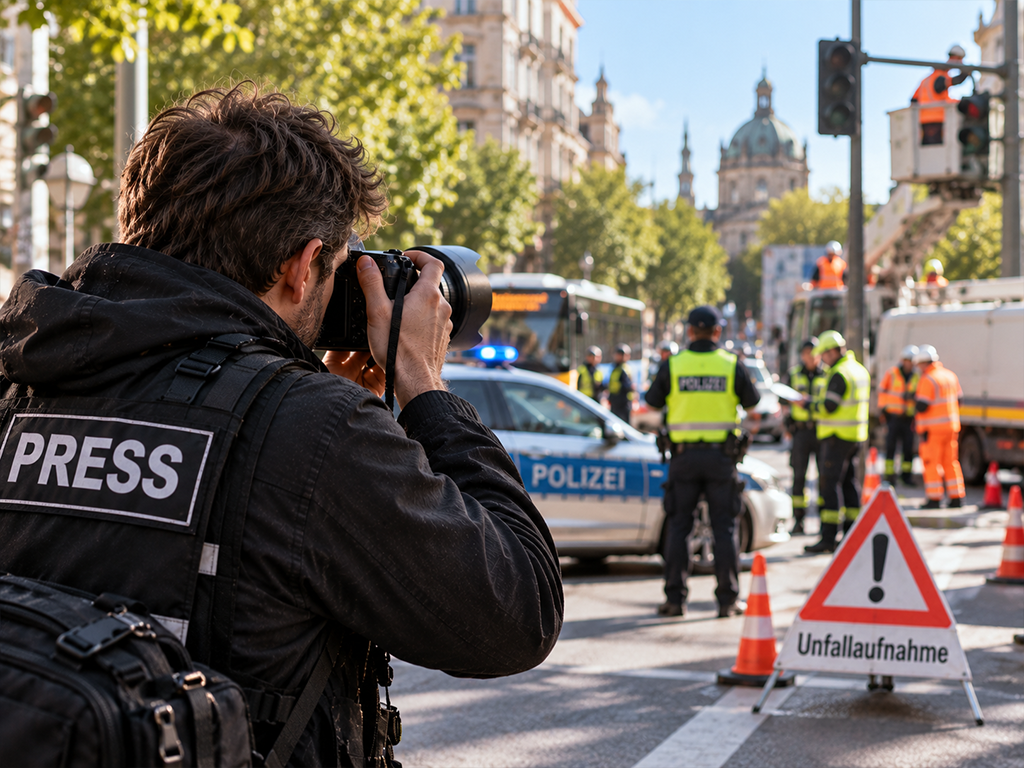
The last five hundred metres are almost always the problem. Roads are closed, diversions are improvised, and the streets nearest the scene fill with emergency vehicles that need to get out again at speed. A car left in the wrong place there is not a parking offence, it is an obstruction, and it will cost you far more than the walk you tried to avoid.
Park legally, park facing out, and park far enough away that you are never blocking an access route. Then walk, and photograph on the way in. Some of the strongest frames of a major incident are made on the approach, when the smoke column still stands above the rooftops, when residents are being moved in dressing gowns, when the traffic has stopped and everyone on the road is looking in one direction. Those pictures disappear within twenty minutes and cannot be reconstructed afterwards.
Vehicle identification helps here more than most photographers expect. A clearly marked press vehicle is treated differently by officers managing a perimeter, and it reduces the risk of being towed while you are working. The IAPP Press Vehicle ID exists for exactly this situation, where a car has to be left close to a scene and needs to be recognisable as press rather than as an abandoned obstruction. It is not a permit to park anywhere, but it makes the conversation with the officer who finds your car a short and reasonable one.
The First Five Minutes: Read the Scene Before You Raise the Camera
The instinct on arrival is to start shooting immediately. The better habit is to spend a short moment reading the scene, because the decisions made in those first moments determine both your safety and the quality of everything that follows.
Safety comes first, and it is mostly about second events rather than the obvious one. Smoke changes direction with the wind, damaged structures fail after the initial collapse rather than during it, and fuel, power lines, falling glass, vehicles arriving at speed and crowds whose mood can shift in seconds are all more likely to injure a photographer than the incident itself. Position yourself where you can leave without pushing through anyone, and never let a long lens hold you in a place your judgement would not keep you.
Then look at the geometry. Where is the cordon now, and where will it be in twenty minutes? It almost always moves outwards, which tells you which frames to make first: the wide establishing picture from the closest lawful position you have, before that position is gone. After that the response itself, crews working, equipment in use, the scale of the deployment. Then the detail that anchors the caption, a street name, a house number, a platform sign.
Note the exact time and location while you are there, not later from memory. In the first hour nobody can tell you yet what happened, and your own record of when you stood where is the foundation of a caption that will survive scrutiny.
Working With Police, Fire Crews and the Public
How a photographer behaves at a cordon has a longer effect than any single picture. The officers on the tape today will be there at the next incident, and they remember who made their job harder.
Identify yourself early and visibly. Wear your press card where it can be seen, stay outside the working area, never step over a hose line or into an access lane, and do not climb on emergency equipment. If you are asked to move, move first and negotiate second, then ask calmly where you may stand instead. That single question is remarkably effective, because it converts a confrontation into a practical problem the officer can solve. If you believe your rights are being restricted without basis, note the time, the unit and the name, keep working from where you are allowed to stand, and let the newsroom take it up afterwards.
Recognition is what makes that conversation short. An officer under pressure has no time to assess who you are, and an internationally recognised credential answers the question in a second. The IAPP press card is designed for precisely that moment, when someone controlling access needs to know immediately that the person with the camera is a working professional rather than a spectator.
The public needs a different kind of care. Bystanders at incidents are often frightened, angry or grieving, and a camera is an easy target for that emotion. Explain who you are if challenged, never photograph your way through a confrontation, and accept that a few steps back may save the whole assignment.
Photographing People on the Worst Day of Their Lives
The ethical decisions in spot news are made in seconds, under pressure, and they are what separates press photography from mere presence at an event. The people in front of the lens did not choose to be there and have no press officer of their own.
Some rules are firm. Do not photograph identifiable casualties in a way that would let relatives learn of a death from a picture. Do not photograph children in distress without a clear public interest and, where possible, without consent from a responsible adult. Do not stage, do not direct, do not move objects at a scene, and never ask a survivor to repeat a gesture for the camera. An arranged frame is no longer a document, and one is enough to discredit every honest image you have ever filed.
Other decisions are judgement rather than rule. Distance, framing and timing let you show grief without exploiting it. A blanket, a hand, a turned back, an abandoned shoe, the reaction of a neighbour: restraint often produces the more powerful photograph, and it is the version an editor can publish. The frame you decide not to make is also a professional decision, and one you may have to defend as carefully as the frames you file.
Legal frameworks differ considerably between countries in what may be photographed and published at an incident scene, particularly regarding victims, minors and private property. Knowing the rules where you work is not optional, and learning them beforehand is far easier than improvising at a cordon.
Captioning and Filing Before the Story Moves On
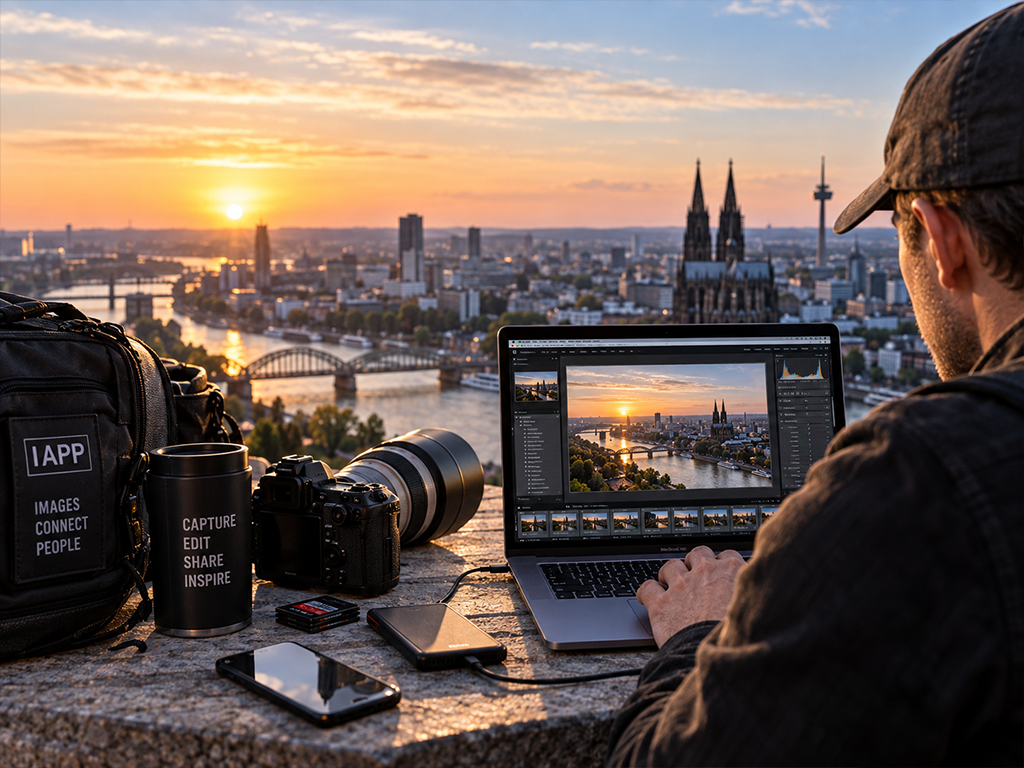
Photographs from the first hour lose value quickly. A strong set filed ninety minutes after the event is worth more than a superb set filed the next morning, which is why the filing routine deserves as much practice as the photography. Edit ruthlessly: six to ten frames that tell the story in sequence will be used, sixty frames of variations will be ignored, because no picture desk under deadline pressure has time to do your editing for you.
The caption is where careless work does lasting damage. Write only what you saw and can verify: the place, the date, the time, what is visible in the frame. Everything else has to be attributed. Casualty figures, causes and names belong to the authority that issued them, and in the first hour they are provisional by definition. A caption reading “according to the fire service spokesperson at the scene” is accurate; the same sentence without attribution is a claim you cannot support. Include your byline and credit, check the spelling of the location, and make sure the time zone in the metadata is correct.
Then get the work out. Transfer over a phone hotspot from the car, keep the original card untouched until the transfer is confirmed, and use a route to editors that already exists rather than one improvised under pressure. Established publishing channels such as UPA NEWS matter here, because a set of pictures that never reaches a desk has no value however good it is.
The Difference Between Being There and Being Trusted
Preparation gets you to the scene and craft gets you the frame, but neither is what gets you back tomorrow. In any region, breaking news is covered again and again by the same small group of photographers: the ones whose credentials, captions and conduct have proved reliable over time.
Part of that is verifiability. A credential an officer, an organiser or a picture editor can confirm independently in a few seconds carries far more weight than a card that merely looks official, which is why online membership verification is a working tool rather than an administrative detail. Part of it is the framework behind the individual photographer: recognised press credentials, vehicle identification, accreditation support, publishing routes and continuing training, all of which exist so that the photographer can concentrate on the scene instead of on their own legitimacy. IAPP membership is built around that framework, and it belongs in place long before the phone rings, because nobody has ever organised their credentials during the first hour of an incident.
The rest is discipline. Keep the bag packed, keep the clock right, arrive calm, read the scene, treat people as people, write captions you could defend in a courtroom, and file fast. Breaking news rewards no one for being lucky. It rewards the photographer who had already decided, long before the call came, exactly how the first hour would be spent.