
Why a Photograph Now Has to Prove Itself
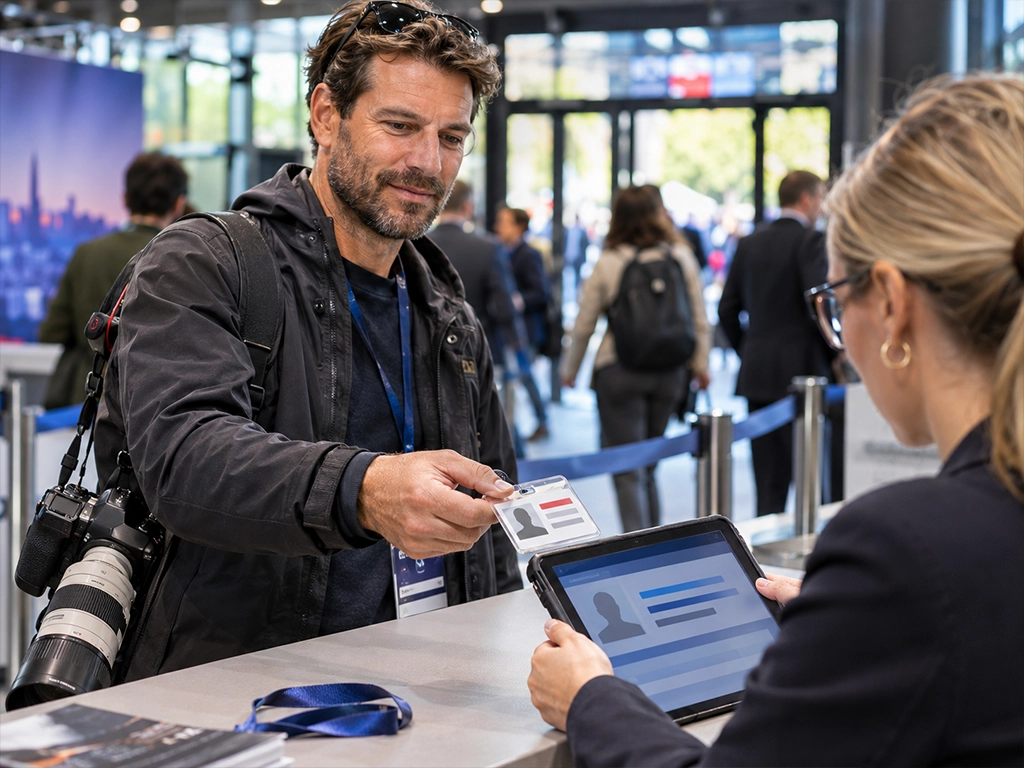
The practical change in newsrooms has little to do with any single fake image. It is that verification has become routine. An editor receiving work from a photographer they have not commissioned before will check what they can check: the metadata, the file history, the photographer’s track record, sometimes the raw file itself. Where a few years ago a convincing frame was enough, the frame is now the beginning of the conversation.
This is uncomfortable, but it favours professionals. A photographer who was present, who can produce originals, who kept notes and whose credentials can be confirmed independently is in a far stronger position than an anonymous file with no history behind it. The work of proving an image is real is largely the work of keeping an orderly record, and that is something a press photographer can do without buying anything.
Content Credentials sit on top of that discipline rather than replacing it. Understanding exactly what they do, and where they currently fall short, is what stops a photographer from either dismissing the technology or relying on it too heavily.
What a Content Credential Actually Records
A Content Credential is a cryptographically signed record attached to an image file. In its simplest form it states which device or software created the file, when, and what was done to it afterwards, with each step signed so that later tampering becomes detectable. Edit the file in software that supports the standard and the edit is appended to the record rather than hidden.
The work behind it comes from the Coalition for Content Provenance and Authenticity, an industry group whose steering committee includes Adobe, the BBC, Google, Microsoft, OpenAI, Sony and others, with the Content Authenticity Initiative promoting adoption. The specification has been through several revisions and continues to move, which is one reason to describe what it does rather than quote a version number at it.
The crucial limitation is easy to state and easy to forget. Provenance is not truth. A photograph can carry a perfectly valid credential and still be misleading: shot out of context, cropped to change its meaning, or captioned wrongly. The signature says where the file came from, not whether the claim made about it is accurate. Everything this publication has said before about captions written from your own notes remains exactly as important as it was.
Reading one is straightforward, and every photographer should do it once with their own files. Free web based inspectors accept a dropped image and display whatever record it carries: the signing entity, the time, the software involved and the sequence of edits. Doing this with a frame of your own, then with the same frame after it has been through a resize, an export and an upload, teaches more about the state of the technology than any explainer, because it shows exactly where the record survives and where it quietly disappears.
Where It Already Works: Cameras, Software, Platforms
Adoption is real, if uneven. As of late 2026, cameras that can sign images at the moment of capture include the Leica M11-P and M11-D, several Sony bodies such as the α1, α9 III, α7 IV and α7R V, and Canon’s EOS R1 and EOS R5 Mark II. Nikon announced the feature for the Z6III, then suspended the service and revoked certificates after a vulnerability was found, which is a useful reminder that this is young infrastructure rather than settled equipment.
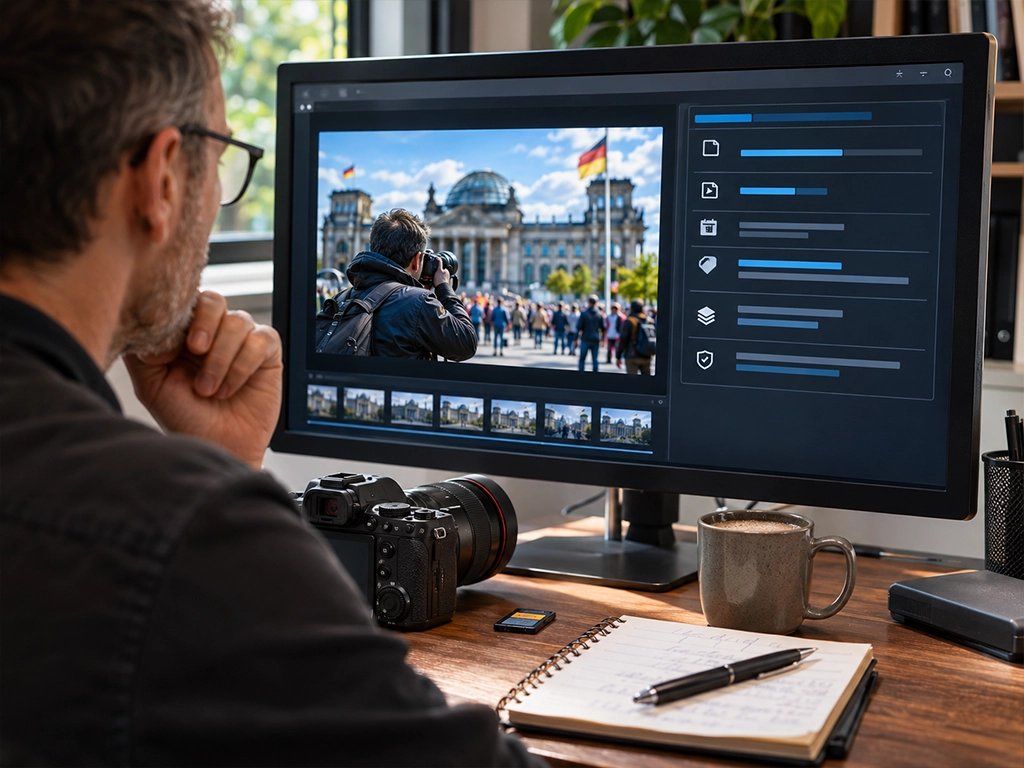
On the processing side the picture is more mature. Photoshop, Lightroom, Camera Raw and Bridge support the standard, as does Capture One, and free web based inspectors let anyone drop a file in and read whatever record it carries. Meta, TikTok, LinkedIn, YouTube, Pinterest and Google Search have all added some form of label or indicator for images that arrive with credentials attached.
For a working photographer the practical consequence is modest but worth acting on: if your camera supports signing, switch it on and learn what your editing software writes into the record. It costs nothing, it occasionally helps, and it puts you ahead of the point when a client starts asking for it.
Where It Breaks: Stripped Metadata, Gaps and Open Flaws
Anyone who tells you the problem of image authenticity has been solved is not following the subject closely. Four weaknesses matter for press work.
The first is that metadata still gets stripped. Image optimisation, format conversion and delivery pipelines routinely discard everything that is not pixels, so a credential that was intact when you filed can be missing by the time the picture is on a website. Infrastructure providers are gradually configuring around this, but it remains the normal failure mode rather than an exception.
The second is certification. A conformance programme exists, yet by the middle of 2026 no dedicated camera and no desktop application had completed it, and several manufacturers were not taking part at all. A credential in a file therefore tells you less about the chain behind it than the word “certified” would imply.
The third is that the system has been broken more than once. In August 2026 a researcher demonstrated that on a rooted Android device arbitrary data could be signed as though it came from a camera, a report the platform vendor declined to fix. In October 2026 a further flaw became public: a signer can exclude parts of a file from the signature, which allows an image to be altered afterwards while the signature and timestamp still validate. Repairs are in progress, but anybody treating a valid credential as proof should know this history.
The fourth is specific to journalism and rarely discussed in the marketing material. Persistent, detailed metadata can endanger people. A record that documents where and when a frame was made is exactly what a photographer may need to strip before publishing work from a protest, a conflict zone or any situation where a source or a bystander could be identified. Provenance and source protection pull in opposite directions, and the photographer has to decide which matters more in each case.
The Part That Does Not Depend on the Technology
Strip away the standards and the question an editor asks is the old one: can you show me where this picture came from? Most photographers can answer it far better than they think, provided they work tidily.
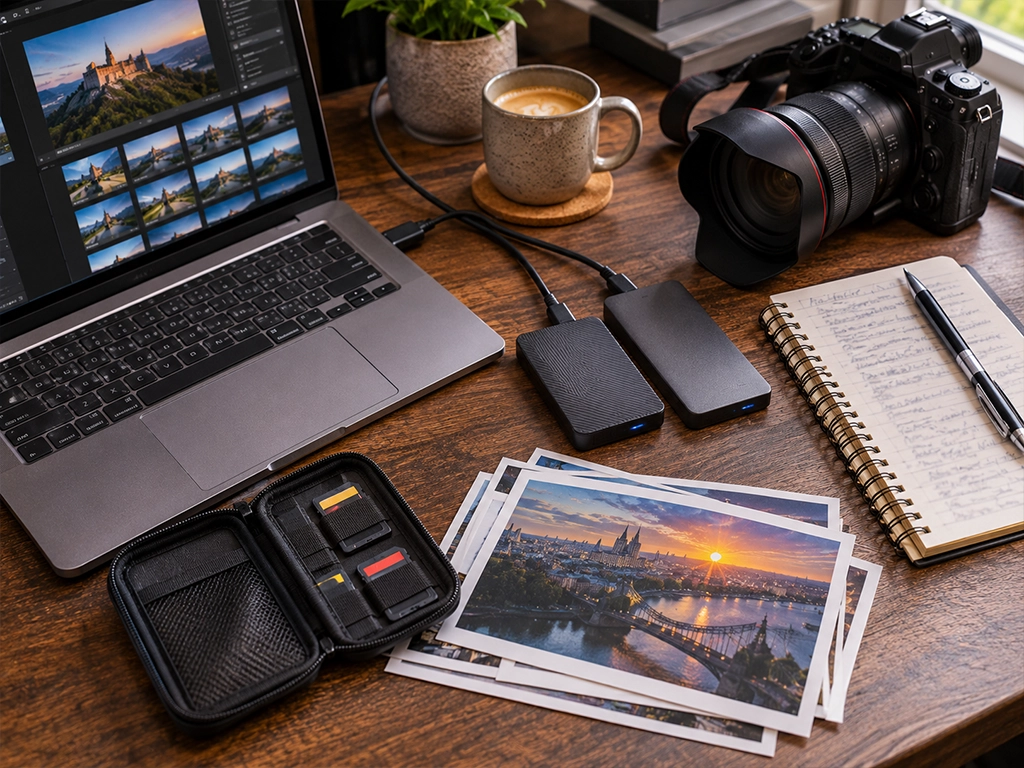
- Keep the original files untouched, with camera metadata intact, and export derivatives rather than overwriting what came off the card.
- Keep the camera clock and time zone correct, because an accurate timeline is the backbone of every other claim you make.
- Keep the notes you took at the scene, with the location, the time and the names of anyone who told you something.
- Keep a second copy of everything, and know which drive it is on.
- Keep a record of what you delivered, to whom, and when.
That set of habits answers a challenge in minutes and has done so for decades. It also happens to be the foundation the newer tools are built on: a photographer already working this way loses nothing by adopting Content Credentials, and a photographer who is not will gain little from them.
It is worth rehearsing how that answer actually looks. An editor queries a frame; you open the catalogue, find the original, confirm the capture time against your notes, and send the raw file with a short factual explanation of the processing applied. The whole exchange takes a quarter of an hour if the archive is in order and a whole afternoon of bad temper if it is not. Nothing about that has changed with the arrival of signatures, except that the queries now come more often.
Signing as Somebody: Identity Behind the File
Here is the gap that technology alone cannot close. A cryptographic signature proves that a particular key signed a particular file. It does not prove who holds that key, what their work consists of, or whether they can be held to a professional standard. Identity has to come from somewhere outside the file.
That is the part a professional association supplies. A credential that an event organiser, a press officer or a picture desk can confirm against a central register in seconds answers the identity question directly, which is why IAPP’s online member verification has become as practical a tool as the card itself. Recognised qualification works the same way at the level of competence rather than identity: the CIPP certificate and seal attaches a verifiable professional standard to the name in the credit line, on a website, in an email signature or on a delivery note.
Combine the two and you have something no generated image can produce: a file with a clean history, filed by a named professional whose standing can be checked by a stranger without having to take anyone’s word for it.
What Editors Will Ask For, and What to Answer
Expect three questions, and prepare the answers once rather than improvising each time.
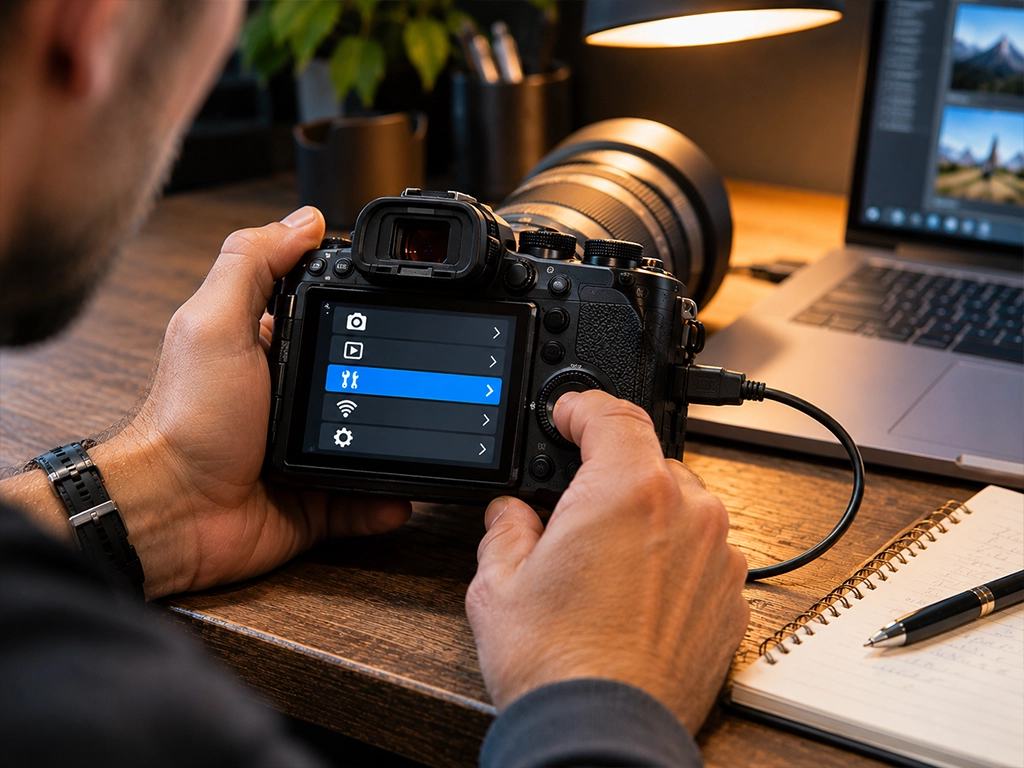
Can you supply the original file? The answer should always be yes, which means your archive has to be organised enough that you can find a specific raw file from eighteen months ago. What was done to this image? Be ready to describe the processing precisely, in the vocabulary of exposure, colour and cropping, and to confirm that nothing entered or left the frame. Who are you, and can that be verified? Give the verification route rather than the assertion.
It is worth putting a short line into your delivery notes stating that images are unmanipulated, that adjustments were limited to exposure, colour and cropping, and that originals are available on request. Suppliers who can say that in writing are a smaller group than they should be, and editors notice.
Written policies are catching up quickly, and they are where this stops being a matter of good intentions. Wire services and serious publications increasingly specify in their contracts what processing is permitted, whether originals must be retained and for how long, and whether any AI assisted step has to be declared. Some now ask about provenance data directly. Read those clauses before you accept the commission rather than after a query lands, and if a client has no written policy, supply your own in the delivery note.
Publishing through established channels reduces the friction further, because the expectations are agreed in advance rather than negotiated per job. Members filing through NewsmexX, the IAPP members’ media platform, are submitting into a system where authorship is attached to a verified identity from the outset, which is precisely the context a provenance question is easiest to answer in.
Provenance Is a Habit, Not a Feature
The honest summary of Content Credentials at the end of 2026 is that they are a promising, partially deployed, demonstrably imperfect system that is still worth using. Switch the feature on where your equipment offers it. Learn to read what a credential says and what it does not say. Do not present one as proof, and do not assume its absence means a picture is fake, because in most delivery chains the record simply did not survive the journey.
What actually protects your work is older and more durable: untouched originals, accurate captions, an orderly archive, processing you can explain, and an identity somebody else can confirm. The association side of that equation is not incidental. Recognised credentials, verification, qualification and publishing routes are the membership benefits that turn a photographer’s claim into something a stranger can check, and IAPP membership exists to put that structure behind the individual name on the credit line.
Software will keep improving and the standards will keep moving. The photographer who can produce the original, explain the edit and prove who they are will be believed in any of those versions of the future.