
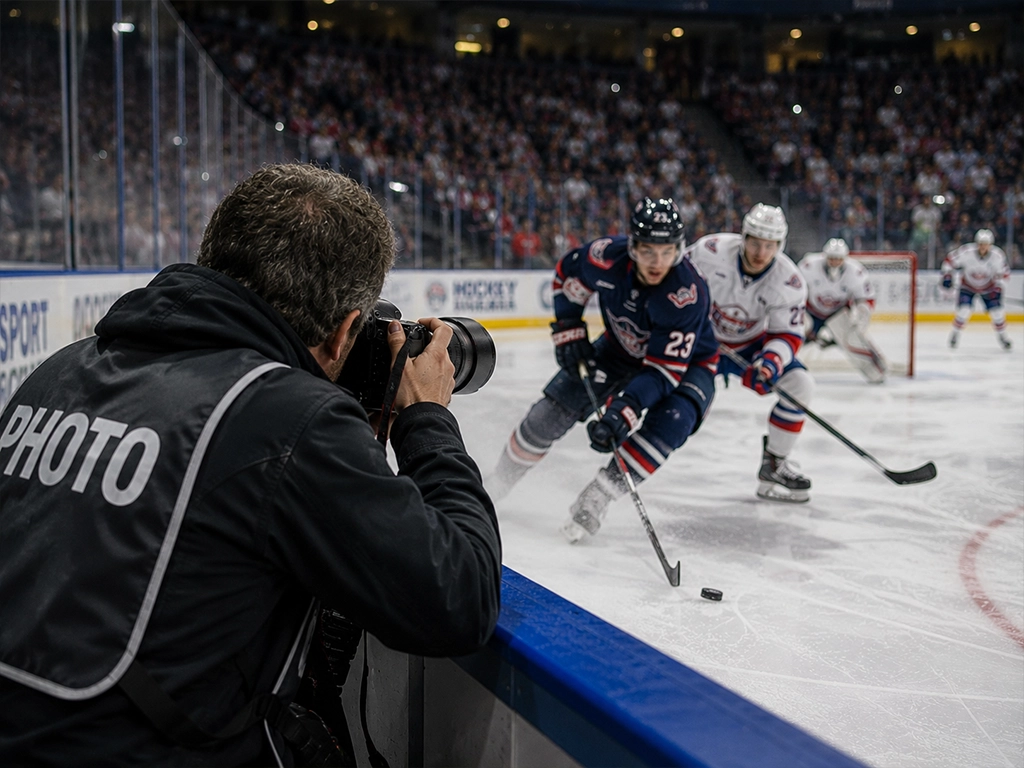
Sports photography is built on a contradiction: you have a fraction of a second to capture a moment you cannot control, cannot repeat, and can never fully predict. The photographers who deliver consistently are not the luckiest but the best prepared, combining technical command of their equipment with a deep understanding of the game in front of them. This guide breaks down the anticipation, gear, settings, and access that separate a usable frame from an unforgettable one. It also looks at why getting into the right position, both physically and professionally, is often the hardest part of the job.
The Split Second That Defines Sports Photography
Every discipline of photography talks about the decisive moment, but in sport that phrase is meant literally. The ball leaving the boot, the fingertip on the finish line, the exact peak of a jump: these moments exist for a few milliseconds and then are gone for good. There is no second take, no request to run the play again, and no way to recreate the raw emotion of a last-minute winner. You either had the camera ready and pointed in the right place, or you did not.
That unforgiving quality is exactly what makes sports photography one of the most demanding fields a press photographer can enter. It combines the technical challenge of freezing fast, unpredictable motion with the editorial pressure of capturing the single image that tells the story of an entire match. Everyone in the stadium sees the goal; the photographer’s job is to be the one who froze it perfectly, from the right angle, with the winning expression visible on the player’s face.
Reputations in this field are built on reliability under those conditions. An editor remembers the photographer who came back from a chaotic, fast-moving event with the frame no one else got, and who did it not once but repeatedly. That consistency is never an accident. It is the product of preparation, anticipation, and a level of technical fluency that lets the photographer think about the game rather than the camera.
Reading the Game Before It Happens
The single most important skill in sports photography is not technical at all. It is anticipation. By the time you see a decisive moment through the viewfinder, it is already too late to react, because human reflexes and camera lag together will lose it. The professional does not react to the moment; they predict it and are already pressing the shutter as it arrives.
This is why the best sports photographers are genuine students of the sports they cover. They understand the patterns of play, the tendencies of individual athletes, and the rhythm that tells them where the ball, and the drama, is about to go. A photographer who knows that a particular striker cuts inside onto their left foot is looking at the right place a half-second before the shot; one who does not is left photographing the aftermath.
Anticipation also extends beyond the action itself. The most powerful sports images are frequently not the goal but the reaction to it: the celebration, the despair, the exhaustion, the confrontation. Keeping the camera up after the whistle, watching faces rather than the ball, and reading the emotional arc of a contest are what separate a competent action shooter from a storyteller. The game gives you the peak moment; awareness gives you everything around it.
Variety is part of that same discipline. A single fixture should yield more than a run of near-identical action frames: the wide establishing shot that sets the scene, the tight portrait of concentration, the detail of hands on a ball or spikes on a track, the interaction between rivals, and the crowd that gives the event its atmosphere. Editors need options to build a page or a gallery, and the photographer who returns with a complete visual story rather than twenty versions of the same tackle is far more valuable. Planning that range in advance, and consciously breaking away from the action to capture it, is a mark of the professional.
Gear Built for Speed and Reach
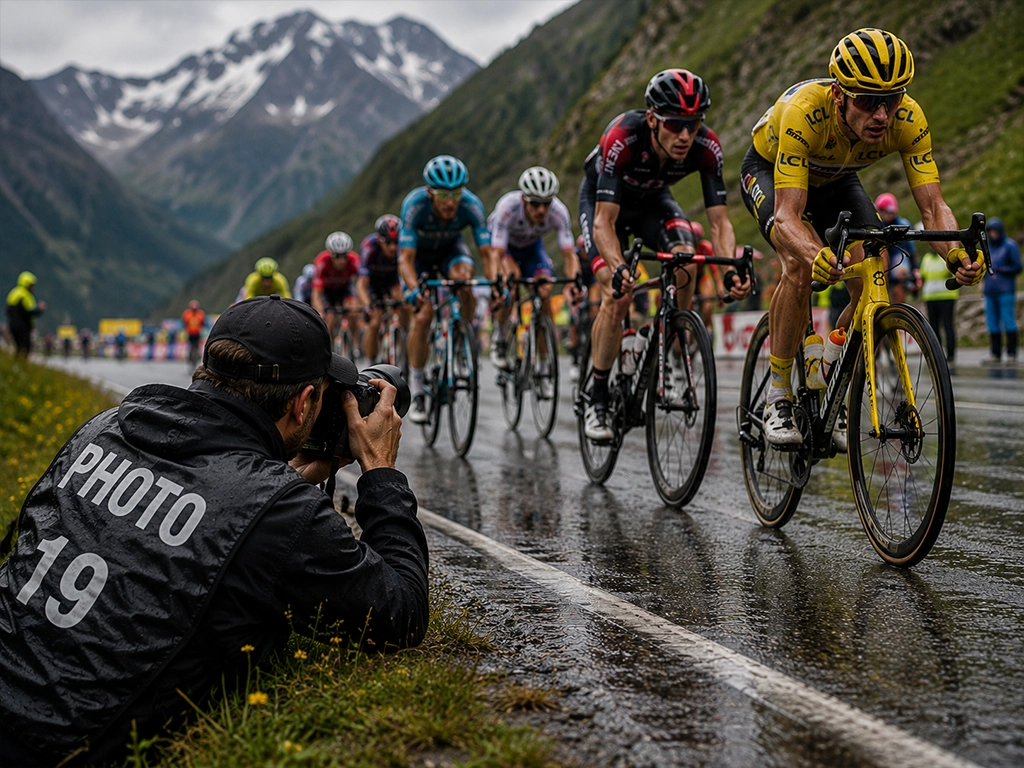
Sports is one of the few areas of photography where equipment genuinely sets a hard limit on what is possible. You cannot freeze a sprinter or reach across a football pitch with a basic setup, and no amount of skill fully compensates for gear that cannot keep up. This is a discipline that rewards fast, capable tools used by someone who knows them intimately.
A working sports kit is usually built around a few essentials:
- A camera body with fast, reliable autofocus and a high continuous frame rate.
- A long telephoto lens, commonly a 300mm or 400mm prime, or a fast 70-200mm zoom for closer action.
- A monopod to support heavy lenses through hours of shooting without fatigue.
- Fast, high-capacity memory cards that can keep up with long bursts.
- A weather-sealed setup, since sport does not stop for rain, and ideally a second body to avoid changing lenses at critical moments.
This equipment is expensive, and for independent photographers that cost is a real obstacle to entering the field. It is one of the practical reasons professional association membership can pay for itself, since members often gain access to partner discounts on exactly the kind of bodies, lenses, and accessories that serious sports work demands.
The Settings That Freeze the Action
Once the gear is in hand, a specific set of technical choices turns fast motion into sharp, usable frames. Sports photography lives at high shutter speeds, because anything slower will blur the very action you are trying to capture. Beyond that headline setting, several habits define reliable results.
The core technical toolkit looks like this:
- A shutter speed fast enough to freeze motion, often 1/1000 second or higher for fast sports.
- Continuous autofocus with subject tracking, so focus follows a moving athlete rather than locking once.
- Burst mode for peak-action sequences, paired with the discipline to shoot in short, timed bursts rather than holding the button down endlessly.
- A managed ISO, frequently via auto-ISO with a minimum shutter speed, to keep exposure correct as light changes.
- RAW capture, which preserves the latitude to recover detail and correct colour on deadline.
One advanced technique deserves special mention. Panning, where you deliberately use a slower shutter speed and track the subject smoothly, renders a sharp athlete against a motion-blurred background and conveys speed in a way a frozen frame cannot. It takes practice to master, but it is one of the tools that lifts sports images from documentation into art.
Conditions add a further layer of difficulty that no single setting solves. Indoor arenas mix artificial light of varying colour and brightness, floodlit night matches create pools of light and shadow across the same pitch, and bright daylight brings its own harsh contrast. Knowing your camera’s usable ISO ceiling, checking exposure against the specific lighting of the venue before play starts, and adjusting as the light shifts through a fixture are all part of the craft. The best sports photographers treat the settings not as a fixed recipe but as a set of dials they adjust continuously as the game and the light evolve.
Position Is Everything: Access to the Action
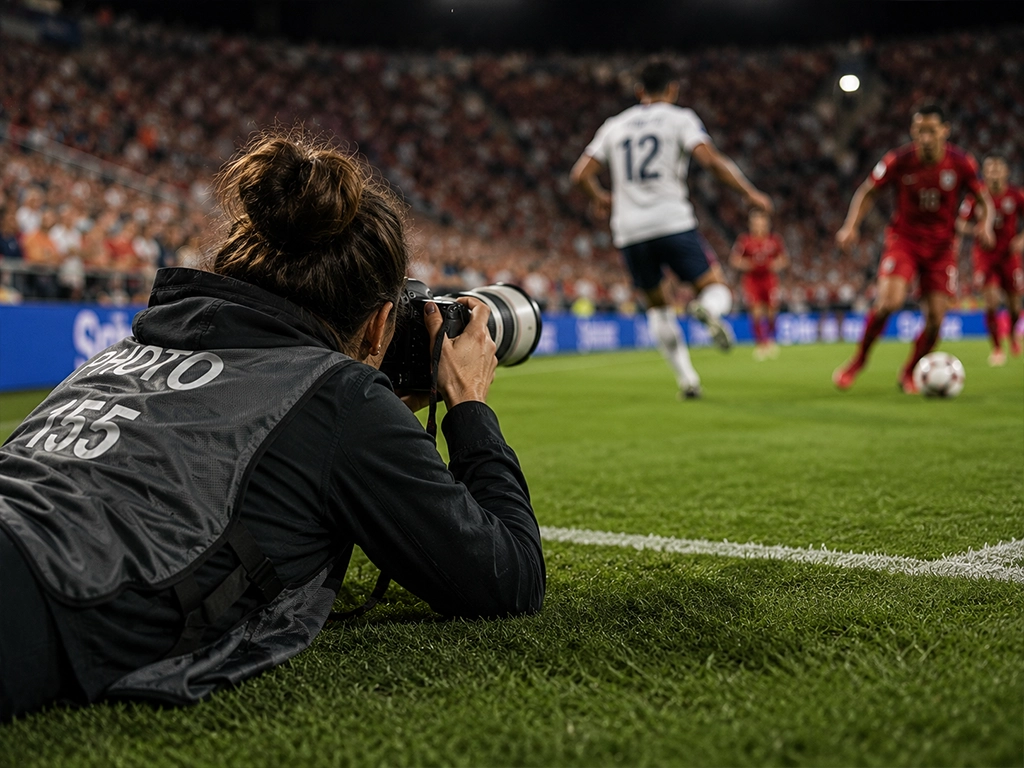
All the skill and equipment in the world are wasted from the wrong seat. Professional sports images are made from the sidelines, the baseline, the corner flag, and the photo positions that put the camera at the level of the action, not from the public stands. Access to those positions is the invisible foundation of every great sports photograph, and it is granted, not assumed.
Major sporting events require formal accreditation, often applied for well in advance and awarded on the basis of credibility and relevance. Organisers want to know that you are a working press photographer with a genuine outlet, and they allocate a limited number of prime positions accordingly. A recognised press credential is what makes that request credible in the first place, and the association’s guidance on seeking accreditation for events reflects how central this step is to professional sports work.
Credibility is also what decides who is trusted with the best positions and invited back. Because the title “press photographer” is unprotected and can be claimed by anyone, demonstrable professional standing carries real weight with the press offices that hand out sideline passes. Certification through a recognised body, such as the IAPP’s Certified International Press Photographer credential, offers exactly that kind of verifiable endorsement, distinguishing a serious professional from an enthusiast with a long lens.
Reaching the Venue and Working the Sidelines
Getting accredited is only half the logistical battle; you still have to arrive, set up, and work safely once you are there. Sports photographers carry heavy, valuable equipment to venues that are often congested, tightly controlled, and far from convenient parking. Arriving early to claim a good position and to settle before play begins is a basic professional habit, and anything that eases the journey is worth having.
Mobility around events is one of the quieter advantages of proper credentials. A press vehicle identification, for instance, can make reaching and parking near a venue considerably easier, and the IAPP’s press vehicle ID is designed for exactly these situations, used alongside a valid press pass on journeys that serve genuine reporting. For a photographer loaded with long lenses and a monopod, that difference in access is not a luxury but a practical necessity.
Conduct on the sidelines matters just as much. Photo positions come with rules that exist for safety and for the integrity of the event: stay out of the field of play, never obstruct officials or broadcast crews, and remain constantly aware of the very real danger of a ball or an athlete arriving at speed. Wearing your credential visibly, following the instructions of stewards, and respecting your colleagues’ positions are all part of being invited back. The sidelines are a shared, professional workspace, and reputations travel quickly among the people who manage them.
Filing Fast Without Cutting Corners
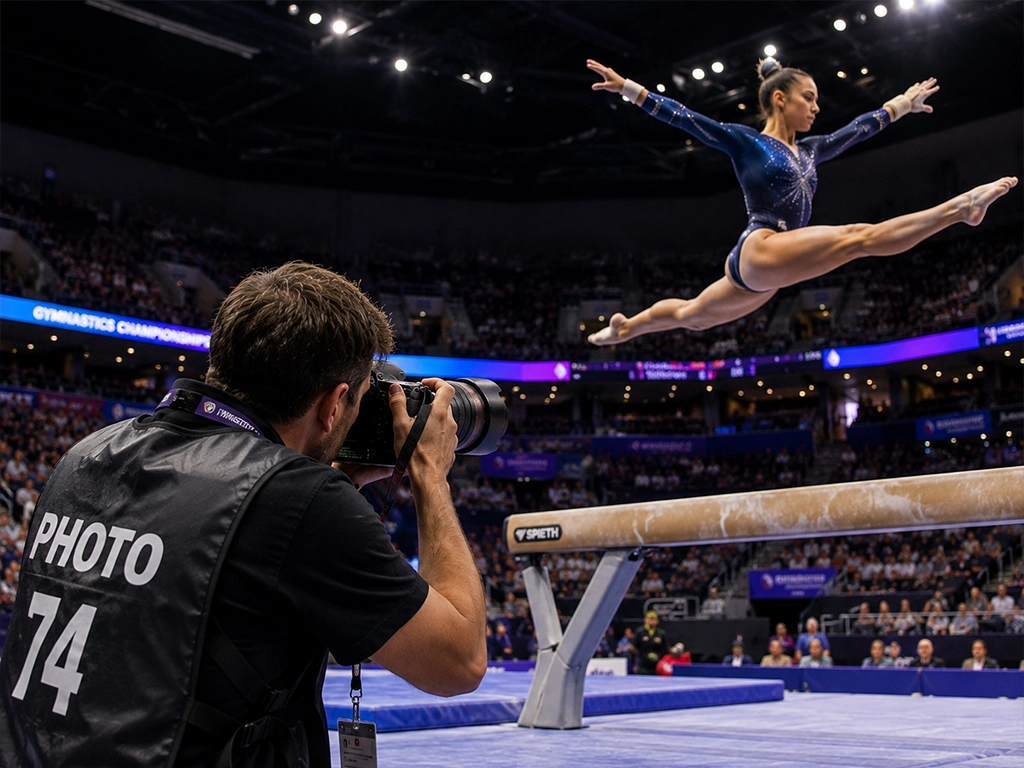
In news sports photography, capturing the image is only the first half of the job. The second is delivering it while it still matters, frequently within minutes of the moment itself. Editors and wire services work to punishing deadlines, and the photographer who files a clean, correctly captioned image first often sees their work run while a slower colleague’s superior frame goes unused.
This demands a fast, disciplined workflow: rapid culling to find the frames that matter, accurate captioning that answers who, what, and when, and reliable transmission from the venue itself. Speed, however, never justifies dishonesty. The ethical standards of press photography apply in full to sport, which means cropping, exposure, and colour correction are legitimate, while adding, removing, or relocating elements to change what happened is not. A photograph that misrepresents the event betrays both the audience and the profession, regardless of how impressive it looks.
The photographers who thrive under this pressure are those who have made the routine second nature, so that filing quickly does not mean filing carelessly. Getting the workflow right is a skill in itself, and it is one that clearly separates those who can work the demands of live sport from those who cannot.
From the Sidelines to a Sustainable Career
Sports photography rewards a rare combination of qualities: technical precision, encyclopaedic knowledge of the game, physical stamina, and the calm to make split-second decisions under pressure. None of it can be faked, and none of it can be learned in a weekend. That is precisely why photographers who master it hold a genuine, lasting advantage in a crowded profession.
Turning that skill into a living, though, depends on more than the images themselves. It requires a way to be seen, to be booked, and to be paid. Presenting your strongest sports work professionally, connecting with editors and organisations that commission it, and building a visible track record are what convert talent into assignments. The wider set of reasons to join the IAPP, from an online portfolio and marketing channels to a job board and career directories, points to the kind of infrastructure that helps independent sports photographers do exactly that.
If you are already shooting sport, or you are ready to pursue it seriously, the practical next step is to build the professional foundation that access, credibility, and career opportunities all rest on. You can do that by choosing to become a member of IAPP. The decisive moment will always last only a fraction of a second. Everything that lets you be ready for it is built long before the whistle blows.