
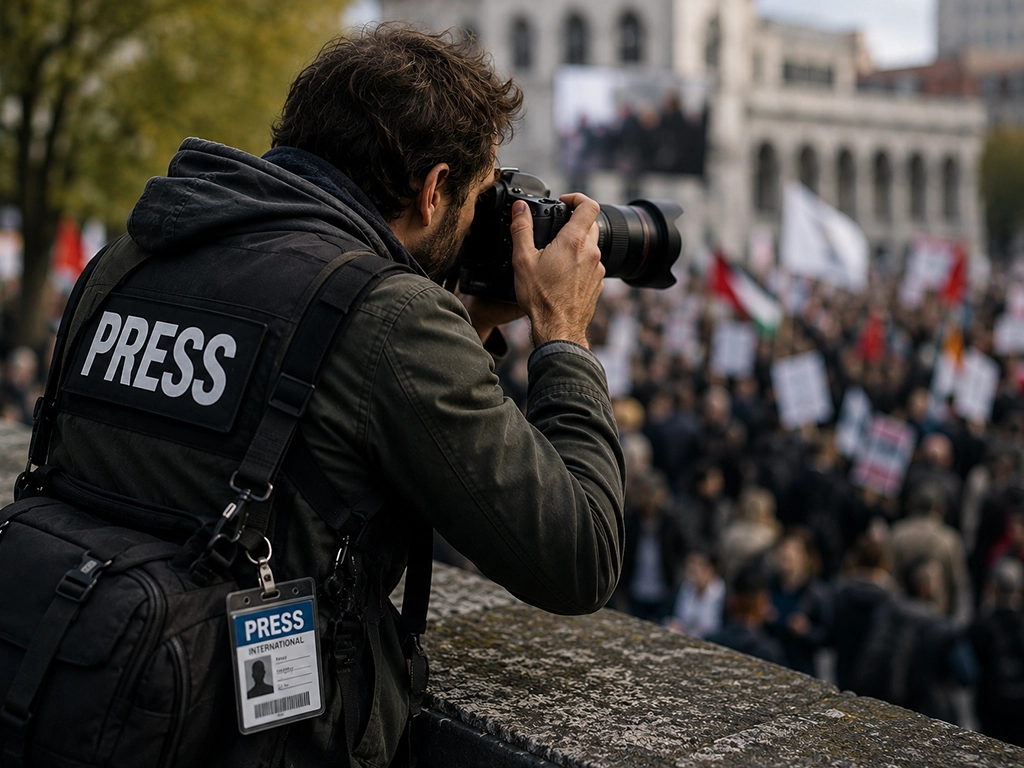
Freelance press photography offers freedom and opportunity—but also intense competition. Discover how photographers can build sustainable careers through professional positioning, networking, accreditation, and long-term strategic development.
Introduction
Freelance press photography has never been more accessible—and at the same time, never more competitive. Digital publishing platforms, social media, and affordable professional equipment have enabled more photographers than ever before to enter the media industry. Yet while opportunities have expanded, the financial and professional challenges facing freelance press photographers have grown just as rapidly.
Today’s freelance photographers are expected to operate not only as visual storytellers but also as entrepreneurs, marketers, editors, networkers, and digital content managers. Building a sustainable career requires much more than technical talent behind the camera. It demands adaptability, professionalism, strategic positioning, and a clear understanding of how the modern media landscape functions.
For many photographers, the freelance path offers freedom, flexibility, and creative independence. However, it also involves uncertainty, fluctuating income, and constant competition for visibility and assignments. In this environment, long-term success depends on the ability to build credibility, establish professional structures, and continuously evolve.
This article explores the realities of freelance press photography in today’s competitive market and outlines practical strategies for developing a sustainable and professional career in visual journalism.
1. The Changing Landscape of Freelance Press Photography
The profession of press photography has changed dramatically over the past two decades. Traditional newsroom structures have shifted, print circulation has declined in many regions, and digital-first publishing has accelerated the demand for fast, adaptable content production.
At the same time, freelance photographers now compete within a global marketplace. Editors and agencies can access images from contributors around the world within minutes, increasing both opportunity and competition. A photographer covering a local event today may find themselves competing not only with regional professionals, but also with international freelancers, citizen journalists, and social media creators who publish content instantly.
Several key developments have reshaped the industry:
- Digital Publishing Cycles
News is published continuously rather than according to fixed print schedules, creating pressure for faster delivery and real-time reporting. - Social Media Visibility
Platforms such as Instagram, X, and LinkedIn influence how photographers promote themselves and reach potential clients. - Lower Entry Barriers
Professional equipment has become more affordable, increasing the number of active freelancers. - Multi-Platform Storytelling
Photographers are often expected to produce video clips, social content, captions, and behind-the-scenes material in addition to still images.
This transformation has created a working environment in which adaptability is essential. Freelance photographers must constantly update not only their technical skills, but also their understanding of digital communication, audience behavior, and content distribution.
In addition, audience expectations have evolved significantly. Modern consumers are exposed to thousands of images every day, meaning photographers must work harder to create visual stories that stand out and retain journalistic value. Authenticity, emotional relevance, and contextual depth have become increasingly important.
Another challenge lies in the economic structure of modern media. Many publications operate under tight budgets, leading to increased pressure on freelancers regarding pricing and turnaround times. Photographers are often expected to deliver more content within shorter timeframes while maintaining professional quality standards.
Despite these challenges, professional press photography remains highly valuable. Credible visual journalism, ethical reporting, and reliable coverage continue to distinguish professional photographers from casual content creators. In an era shaped by misinformation, manipulated visuals, and rapidly generated online content, trustworthy press photography has become more important—not less.
Ultimately, photographers who understand how the industry is evolving and who are willing to adapt strategically are far more likely to build sustainable careers within this increasingly competitive environment.
2. Developing a Professional Identity
One of the most important factors in building a sustainable freelance career is establishing a recognizable professional identity. In a crowded market, photographers must communicate not only what they do, but also why their work matters.
A strong professional identity is built through:
- Consistent visual style
- Clear journalistic focus
- Reliable communication
- Ethical standards and professionalism
Freelancers who specialize in particular subjects—such as politics, culture, travel, humanitarian reporting, or sports—often develop stronger long-term positioning than those attempting to cover every possible topic.
Professional presentation also plays a significant role. A well-structured portfolio, a clear biography, and visible professional affiliations contribute to credibility and trustworthiness.
Platforms such as https://www.ia-pp.com/apply-for-your-own-portfolio.html allow photographers to present their work professionally while strengthening their visibility within an international journalistic environment.
In today’s media landscape, perception matters. Editors and organizations are more likely to work with photographers who demonstrate consistency, professionalism, and a clear sense of purpose.
3. Building Financial Sustainability
Creative passion alone is rarely enough to sustain a freelance career over the long term. Financial planning and diversification are essential for stability in an unpredictable industry.
Many freelance photographers combine multiple revenue streams, including:
- Editorial assignments
- Licensing and syndication
- Event coverage
- Corporate storytelling projects
- Workshops or educational content
- Print sales and exhibitions
Diversification reduces dependency on any single source of income and provides greater resilience during slower periods.
Freelancers must also learn to manage operational costs effectively. Equipment maintenance, insurance, software subscriptions, travel expenses, and taxes all represent ongoing financial commitments.
Professional discounts and industry-related benefits can therefore have a meaningful impact on long-term sustainability. Resources such as https://www.ia-pp.com/press-discounts.html offer advantages that may help reduce operational expenses for active press photographers.
Equally important is understanding the value of one’s own work. Many freelancers struggle with underpricing, particularly early in their careers. Sustainable pricing should reflect not only shooting time, but also editing, travel, preparation, expertise, and professional risk.
Building financial sustainability requires patience and discipline. Long-term careers are rarely built through short-term success alone.
4. The Importance of Access and Accreditation
For freelance press photographers, access is one of the most valuable professional assets. Without proper accreditation, photographers may face restrictions when attempting to cover political events, international conferences, cultural festivals, or breaking news situations.
Professional press credentials help establish legitimacy and trust in unfamiliar environments. Event organizers, institutions, and authorities are far more likely to recognize photographers who can present valid press identification.
Travel-related assignments especially benefit from professional accreditation. International work often requires photographers to demonstrate their professional role quickly and clearly.
For example, https://www.ia-pp.com/travel-press-card.html provides internationally oriented press identification designed to support photographers working across borders and in travel-related journalistic environments.
Accreditation also contributes to professionalism in broader terms. It signals commitment to journalistic standards and helps photographers position themselves more confidently within competitive media spaces.
However, credentials alone are not enough. Access must be supported by professional conduct, reliability, and ethical responsibility.
In many situations, accreditation functions as an important first impression. Security personnel, public relations teams, and event coordinators often need to make rapid decisions regarding access permissions. A photographer who can present professional identification immediately appears more credible and organized than someone without clear documentation.
This becomes particularly relevant in fast-moving situations such as demonstrations, sports events, cultural festivals, or emergency coverage. In these environments, delays caused by missing or unclear credentials may result in lost opportunities or restricted movement.
International travel introduces additional complexities. Different countries and organizations may have varying expectations regarding media credentials, documentation, or proof of professional activity. Freelancers who regularly operate across borders therefore benefit from maintaining professional documentation that supports their role within the media industry.
Accreditation can also help photographers build confidence in themselves and their work. Freelancers often operate independently and must navigate unfamiliar environments without institutional backing. Professional identification creates a stronger sense of legitimacy and belonging within journalistic spaces.
At the same time, photographers should understand that accreditation carries responsibility. Holding recognized press credentials means representing professional journalism standards in public environments. Respectful behavior, ethical conduct, and professional communication remain essential parts of maintaining trust and credibility.
In competitive markets, access is often one of the defining differences between hobbyists and established professionals. Freelancers who invest in professional recognition place themselves in a stronger position to pursue larger assignments and long-term opportunities.
5. Networking and Professional Relationships
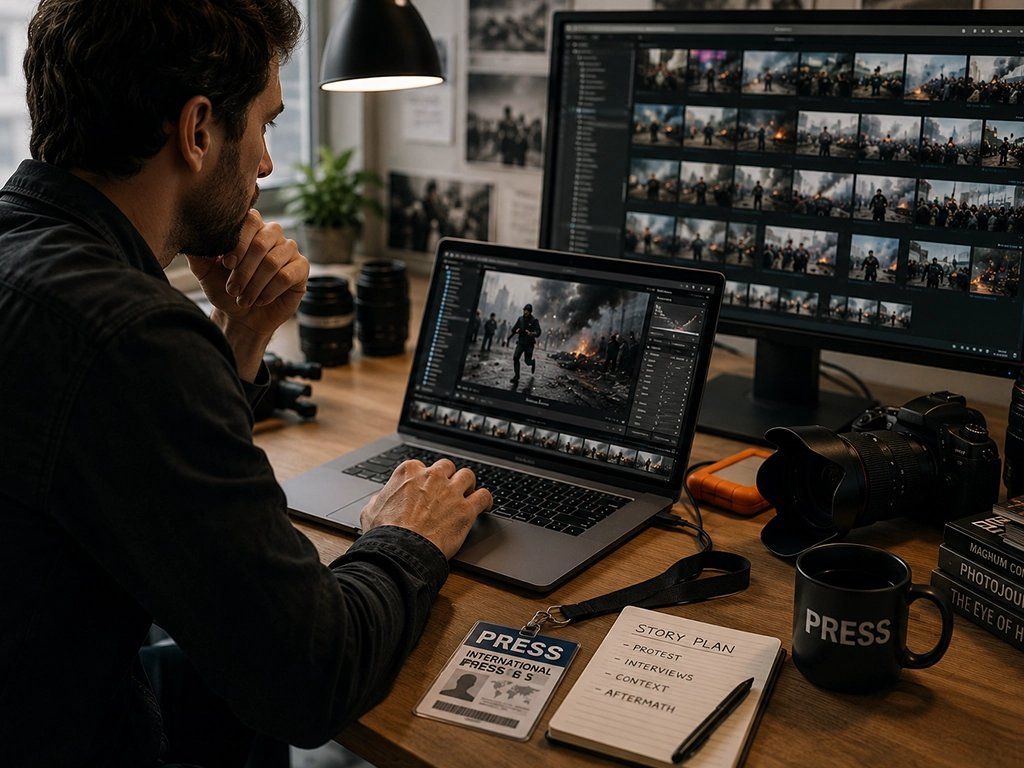
Freelance careers are built on relationships as much as on talent. Editors, agencies, journalists, organizations, and fellow photographers all play a role in creating future opportunities.
Networking should not be viewed purely as self-promotion. Effective professional relationships are built on trust, collaboration, and mutual respect.
Photographers can strengthen their networks by:
- Attending media events and conferences
- Collaborating on joint projects
- Maintaining professional communication
- Supporting other professionals within the industry
- Participating in journalistic associations and communities
Professional organizations can be particularly valuable in this regard. They provide environments where photographers can connect with like-minded professionals, exchange knowledge, and increase visibility.
Comparative information such as https://www.ia-pp.com/iapp-in-comparison.html also helps photographers better understand how professional associations differ and which structures align best with their career goals.
In freelance journalism, opportunities often emerge through recommendation and reputation rather than traditional applications alone.
6. Managing Competition in the Digital Era
Competition within freelance photography is intense and continuously evolving. The speed of digital publishing means that photographers must constantly adapt to changing expectations, technologies, and audience behaviors.
At the same time, the widespread availability of smartphone cameras and user-generated content has altered public perceptions of photography itself. Many organizations now expect rapid content production at lower costs, increasing pressure on professionals.
In this environment, freelance photographers must focus on what distinguishes professional journalism from casual content creation.
Important differentiators include:
- Editorial Reliability
Editors need photographers who consistently deliver usable material under pressure. - Ethical Standards
Professional journalists understand the importance of accuracy, context, and responsible reporting. - Technical Quality
High-quality imagery remains essential for professional publication standards. - Storytelling Ability
Strong images communicate context, emotion, and narrative depth. - Contextual Understanding
Experienced photographers understand the broader significance of the situations they document. - Long-Term Consistency
Sustainable careers are built through reliability over time, not isolated successes.
Professional photographers also bring experience in working under pressure, handling sensitive situations, and delivering accurate visual documentation.
Rather than competing solely on speed or price, sustainable freelancers position themselves around quality, credibility, and specialization.
This professional positioning is further supported by the structured benefits and resources described here:
https://www.ia-pp.com/benefits-overview.html
The goal is not simply to survive within a crowded market, but to establish long-term relevance and professional trust.
Another important aspect of competition is visibility. In the digital era, photographers are expected not only to produce strong work but also to maintain an active professional presence online. Websites, social media profiles, digital portfolios, and publication archives all contribute to how photographers are perceived by editors and audiences.
However, visibility alone does not guarantee sustainability. Many photographers fall into the trap of constantly chasing algorithms, trends, or viral moments. While online attention can create short-term exposure, sustainable careers are more often built through professionalism, consistency, and strong relationships with clients and organizations.
Freelancers must also navigate the growing influence of artificial intelligence and automated content systems. AI-generated imagery and algorithm-driven media distribution are beginning to change audience expectations and visual communication standards. This makes authenticity increasingly valuable. Real-world journalism, human perspective, and verified reporting remain areas where professional photographers maintain a critical advantage.
Competition can also create psychological pressure. Constant comparison through social media may lead freelancers to undervalue their work or feel overwhelmed by the apparent success of others. Maintaining a clear sense of personal direction and professional identity is therefore essential.
Ultimately, competition should not only be viewed as a threat. It can also encourage photographers to refine their skills, strengthen their storytelling abilities, and develop more distinctive professional profiles. Those who adapt strategically and maintain high standards are far more likely to remain relevant within the evolving media landscape.
7. Mental Resilience and Long-Term Career Sustainability
Freelance journalism can be rewarding, but it can also be emotionally and mentally demanding. Irregular income, uncertain assignments, travel pressures, and constant competition create ongoing stress for many professionals.
Long-term sustainability therefore depends not only on financial stability but also on personal resilience.
Freelancers should pay attention to:
- Work-life balance
- Realistic scheduling
- Mental recovery periods
- Physical health and travel fatigue
- Professional boundaries
Burnout is a genuine risk within the media industry, particularly for freelancers who feel pressured to remain constantly available.
Maintaining motivation over many years requires photographers to reconnect regularly with the purpose behind their work. Passion for storytelling, curiosity about the world, and commitment to journalism often become the driving forces that sustain careers through difficult periods.
At the same time, professional structures and supportive networks can reduce isolation and provide important guidance throughout a photographer’s career journey.
8. Adapting to the Future of Visual Journalism
The future of freelance press photography will continue to be shaped by technological innovation, changing audience habits, and evolving media economics.
Artificial intelligence, automated image analysis, and algorithm-driven publishing systems are already influencing how visual content is distributed and consumed. Photographers who remain adaptable and informed will be better prepared to navigate these developments.
Future-oriented freelancers should focus on:
- Continuous Learning and Skill Development
Technology and industry expectations evolve rapidly. - Digital Workflow Optimization
Efficient editing, storage, and delivery systems improve competitiveness. - Ethical Awareness Regarding AI and Image Authenticity
Trustworthy journalism depends on transparency and accuracy. - Building Direct Audience Relationships
Personal branding and direct communication channels are becoming increasingly important. - Maintaining Professional Standards in Fast-Changing Environments
Consistency and reliability remain essential regardless of technological change.
Importantly, the role of authentic journalism is unlikely to disappear. In an era of misinformation and manipulated content, trustworthy visual reporting may become even more valuable.
Freelance photographers who combine technical excellence with ethical responsibility and professional adaptability will remain essential contributors to modern journalism.
The future will likely reward photographers who are capable of balancing innovation with integrity. While technology continues to evolve, audiences still value authentic human perspectives and emotionally compelling storytelling. Images that document real situations with honesty and depth retain a unique impact that automated systems cannot fully replicate.
At the same time, photographers must remain open to new tools and workflows. AI-assisted editing, cloud collaboration systems, and digital publishing platforms can improve efficiency when used responsibly. The challenge lies in integrating these technologies without compromising journalistic ethics or authenticity.
The rise of subscription-based content platforms and direct audience support models may also create new opportunities for freelancers. Many photographers are increasingly building independent communities through newsletters, social media, and exclusive content channels. This allows them to diversify income sources and reduce dependency on traditional media structures.
Another significant development is the growing importance of multimedia storytelling. Modern audiences often expect a combination of photography, short-form video, audio, and written context. Freelancers who develop cross-media skills may therefore gain a competitive advantage in the coming years.
However, despite all technological advancements, the fundamental purpose of press photography remains unchanged: documenting reality and communicating stories that matter. Ethical standards, contextual accuracy, and professional responsibility will continue to define the difference between professional journalism and disposable digital content.
The photographers who succeed in the future are unlikely to be those who simply follow trends. Instead, success will belong to those who remain adaptable while preserving the credibility, integrity, and human perspective that define meaningful visual journalism.
Conclusion: Building a Career Beyond the Camera
A sustainable freelance career in press photography is built through far more than strong images alone. It requires professionalism, strategic thinking, resilience, and the ability to adapt to an increasingly competitive global market.
Photographers who succeed over the long term understand that sustainability comes from:
- Professional credibility
- Financial discipline
- Reliable networks
- Ethical standards
- Continuous development
While the freelance path involves uncertainty, it also offers remarkable opportunities for independence, creativity, and international engagement.
Organizations such as the
International Association of Press Photographers
support photographers by providing professional structures, visibility, resources, and access to a broader international community.
Ultimately, building a sustainable freelance career means building trust—through the quality of your work, the consistency of your professionalism, and the integrity of your journalism.