
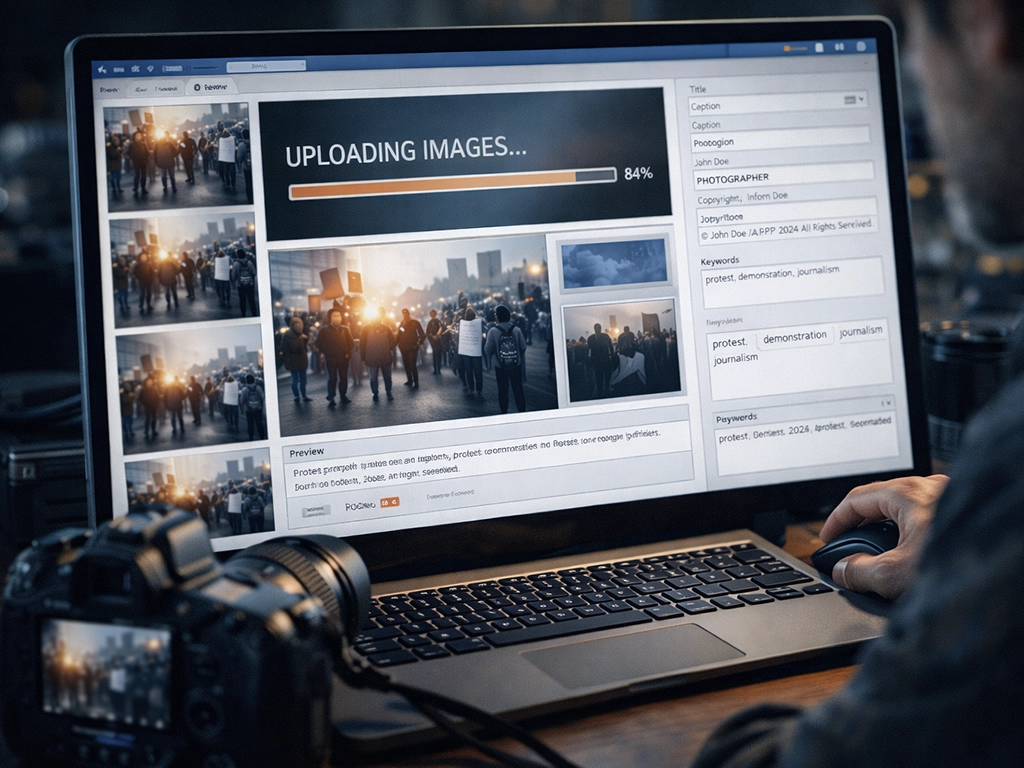
1. The Invisible Threat to Professional Photography
In today’s hyper-connected media landscape, images travel faster than ever before. Within seconds of publication, a photograph can be shared, reposted, downloaded, screenshot, altered, and redistributed across continents. For press photographers and photojournalists, this unprecedented reach presents both opportunity and risk. While digital platforms amplify visibility and storytelling power, they also expose visual work to widespread unauthorized use.
The problem is not new. Copyright infringement has existed for as long as creative work has held value. However, the scale, speed, and automation of digital misuse have transformed isolated incidents into a structural challenge for the profession. Social media reposts without attribution, online news portals copying images without licensing, and automated scraping systems harvesting photographs for data analysis are now part of everyday reality.
For members of the International Association of Press Photographers (IA-PP), this issue strikes at the heart of professional sustainability. Copyright protection is not merely a legal technicality—it is the foundation of economic independence, journalistic integrity, and creative recognition.
Understanding how copyright works, how digital theft occurs, and how photographers can protect themselves has become an essential professional competence.
2. Understanding Copyright in an International Context
A common misconception within photography is that copyright must be formally registered to be valid. In reality, across most jurisdictions worldwide, copyright protection attaches automatically once an original photograph is produced; formal registration is not required for foundational protection.
Nonetheless, the international landscape of copyright law is more nuanced than this straightforward rule implies. The Berne Convention for the Protection of Literary and Artistic Works, which has been ratified by over 180 nations, enshrines the principles of automatic protection and national treatment. Consequently, photographers from any member country are entitled to copyright protection throughout all other signatory states. Despite this broad coverage, enforcement mechanisms, damages, and procedural requirements remain distinct and often vary considerably between countries.
Photographers should be aware of several critical distinctions:
Moral Rights vs. Economic Rights: In numerous European jurisdictions, photographers retain robust moral rights—including the right to attribution and the right to oppose derogatory treatment of their work. By contrast, other regions place greater emphasis on economic rights, such as those relating to reproduction and distribution.
Duration of Protection: Generally, copyright endures for the life of the creator plus fifty to seventy years, with specific provisions applicable to commissioned or employment-based photography.
Registration Advantages in Certain Countries: While registration is not necessary for basic protection, certain jurisdictions—such as the United States—require registration prior to initiating infringement litigation or seeking statutory damages.
For international press photographers, especially those reporting on global events, thorough legal understanding is essential for effective risk management within the profession.
3. The Growing Problem of Image Theft in the Digital Age
Digital theft is rarely dramatic. It is often subtle, automated, and normalized. The following patterns have become increasingly common:
- Social Media Reposting Without Attribution
Images are downloaded and reposted without credit, license, or consent. Even well-meaning users may assume that publicly visible content is free to reuse. Over time, attribution chains disappear, and authorship becomes invisible. - News Aggregators and Content Farms
Some websites replicate trending stories and images to generate advertising revenue. Photographs may be embedded or copied directly without licensing agreements. - Commercial Misuse
Images originally created for editorial contexts are reused in promotional or advertising environments without authorization, potentially altering the message or implying endorsements that never existed. - AI Training and Data Scraping
Automated systems scrape publicly available images to train machine learning models. While the legal status of such practices continues to evolve, the absence of consent raises serious ethical and economic concerns for creators.
The cumulative impact of these practices is profound. Individual infringements may seem minor, but collectively they undermine licensing markets, distort attribution, and erode trust in professional journalism.
4. Practical Digital Protection Strategies
While no system guarantees absolute protection, photographers can significantly reduce risk through deliberate digital practices.
Key strategies include:
- Embedding IPTC Metadata
Including authorship, copyright notice, contact information, and licensing terms in metadata ensures that essential information travels with the file. Even if visible credits are removed, metadata can help establish authorship during disputes. - Strategic Watermarking
Subtle but visible watermarks can discourage casual misuse. However, they must be balanced against editorial aesthetics and usability. - Reverse Image Search Monitoring
Tools such as reverse image search engines allow photographers to track unauthorized use. Regular monitoring enables early detection and faster enforcement. - Controlled Distribution and Licensing Platforms
Using reputable agencies or licensing platforms creates documentation trails and contractual clarity.
Importantly, digital protection is not merely technical—it is strategic. Professional photographers must decide which images to release freely for visibility and which to protect more rigorously for commercial use.
5. Legal Enforcement: Realistic Options and Limitations
Discovering unauthorized use is only the first step. Enforcing rights requires careful assessment of proportionality, jurisdiction, and cost.
Common enforcement approaches include:
- Direct Contact and Licensing Offer
In many cases, a professional but firm notification results in retroactive licensing agreements or removal of the image. - Cease-and-Desist Letters
Formal notices, often issued through legal counsel, can compel compliance and document infringement. - Negotiated Settlements
Financial compensation may be possible, particularly when commercial misuse is evident. - Litigation
In cross-border cases, litigation may be complex and costly. Photographers must weigh potential recovery against procedural burden.
While legal action can be effective, it is not always practical for individual freelancers acting alone. Documentation, contracts, and clear communication remain crucial defensive tools.
6. The Role of Professional Associations in Copyright Awareness
In an environment defined by rapid technological change and legal uncertainty, collective professional frameworks provide orientation.
Organizations such as the International Association of Press Photographers contribute to professional standards in several ways:
- Providing up-to-date information on legal developments affecting press photography.
- Promoting ethical guidelines that strengthen credibility in disputes.
- Encouraging professional documentation practices.
- Supporting dialogue on emerging challenges such as AI image training.
Membership in a recognized professional body also reinforces credibility. When photographers operate under shared standards, licensing negotiations and enforcement conversations gain authority.
This is not merely symbolic. Professional recognition can influence how editors, institutions, and even courts perceive the seriousness of claims.

7. Ethical Responsibility and Public Trust
Copyright protection is not solely about financial compensation. It is deeply connected to public trust.
Press photography operates within a fragile ecosystem of authenticity. When images are copied, altered, stripped of context, or repurposed misleadingly, the public’s confidence in visual journalism erodes.
Ethical standards in copyright enforcement must therefore balance firmness with proportionality. Aggressive enforcement strategies can damage relationships if misapplied. Conversely, passive tolerance of systematic misuse undermines the profession.
Maintaining integrity means:
- Documenting authorship clearly.
- Preserving contextual accuracy.
- Defending rights responsibly.
- Engaging constructively with legitimate partners.
8. Conclusion: Protecting the Future of Visual Journalism
Copyright in modern media is not a static legal concept—it is an evolving battlefield shaped by technology, globalization, and shifting consumption habits.
For press photographers, the question is no longer whether image theft occurs, but how to respond strategically. Digital protection measures, legal literacy, and professional networking form a triad of resilience.
The future of visual journalism depends on sustainable professional structures. Individual talent remains essential, but collective standards strengthen protection and credibility.
In this context, professional associations such as the International Association of Press Photographers play an important role—not as enforcement bodies, but as platforms for shared knowledge, ethical alignment, and international recognition.
Ultimately, protecting copyright means protecting authorship. Protecting authorship means safeguarding the independence and integrity of the press.
And safeguarding the press remains a cornerstone of democratic societies worldwide.